

Welcome to the latest edition of the Fog Chaser newsletter—sharing a new original instrumental song & photos every month. (previous issue: reliquary)
I usually share one poem to accompany each song I send, but this month calls for two. Two poems — 63 years and a continent apart — that feel in conversation with one another.
Both center on the notion of nature as balm; I’d go as far as to say these are some OG “touching grass” poems, and I think they’re especially worth our attention now.1
They ask: “What do we do when it’s all too much?”
What do you do when you find the “world is too much” with you, as Wordsworth puts it? How do you find your footing and stay grounded?
I lifted the phrase ‘sleeping flowers’ out of that Wordsworth poem; I love what it evokes. Some flowers sleep at night, like daisies and tulips, and there are some that only open at night, like the night-blooming cereus (Queen of the Night) that you find in the desert.
But as I write to you during this particularly cold January, I’m also thinking of all the dormant bulbs and seeds hidden under meadows, the wildflowers sheltered and slumbering beneath my feet, waiting for those reliable cues from nature that will compel them to emerge again.
The sleeping flowers give me something to hold onto. Their need for rest gives me comfort, and encourages me to rest, too. They are all promise, all hope — and we need that now more than ever.

🎵 This month’s piece is in D major / B minor.2
For more piano songs from this volume, check out reliquary, woodsmoke, and shadow of a cloud.
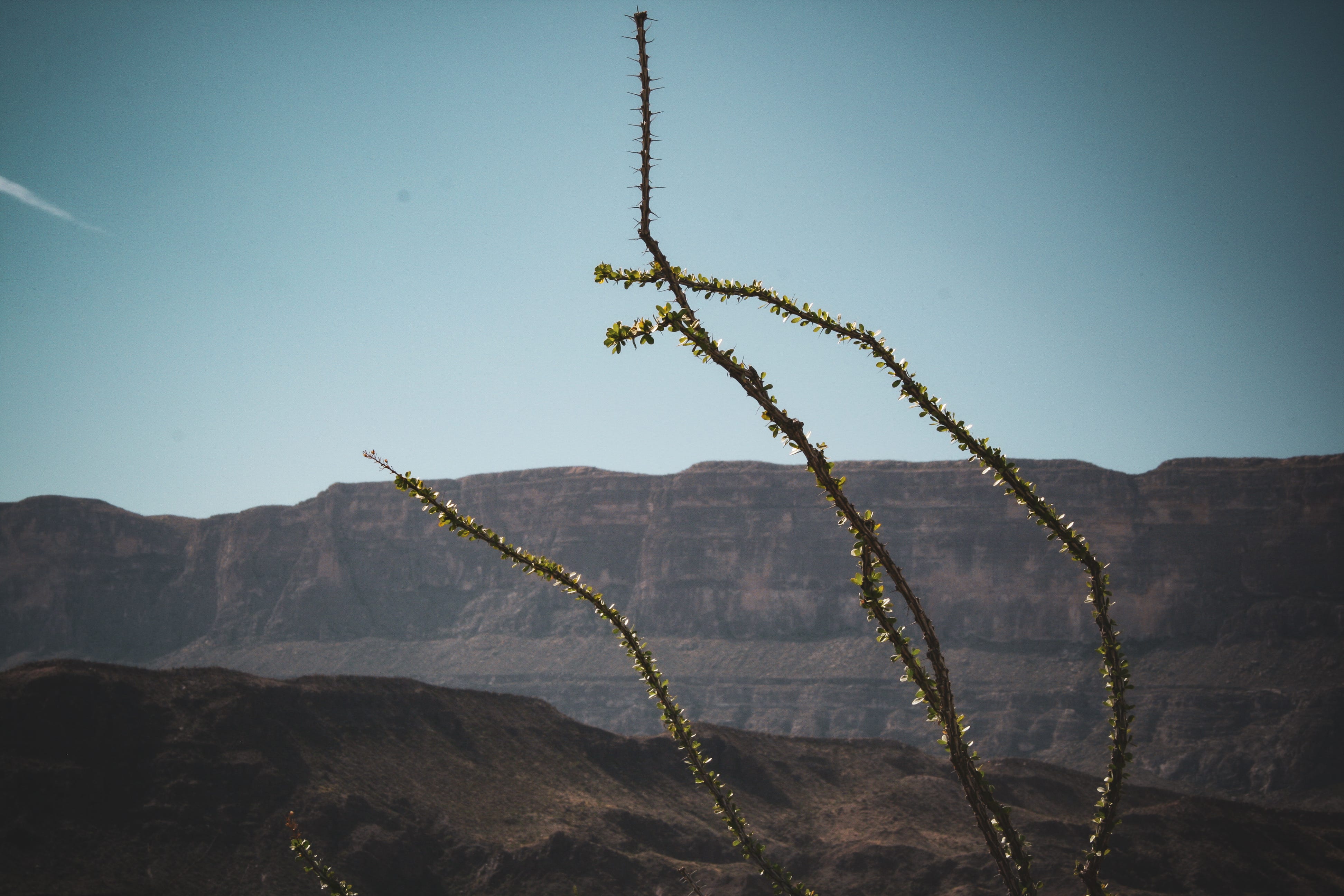
📷 This month’s photo was taken in Big Bend National Park in West Texas.3

The World Is Too Much With Us
by William Wordsworth4
The world is too much with us; late and soon,
Getting and spending, we lay waste our powers;—
Little we see in Nature that is ours;
We have given our hearts away, a sordid boon!
This Sea that bares her bosom to the moon;
The winds that will be howling at all hours,
And are up-gathered now like sleeping flowers;
For this, for everything, we are out of tune;
It moves us not. Great God! I’d rather be
A Pagan suckled in a creed outworn;
So might I, standing on this pleasant lea,
Have glimpses that would make me less forlorn;
Have sight of Proteus rising from the sea;
Or hear old Triton blow his wreathèd horn.

When I Heard the Learn’d Astronomer
by Walt Whitman5
When I heard the learn’d astronomer,
When the proofs, the figures, were ranged in columns before me,
When I was shown the charts and diagrams, to add, divide, and measure
them,
When I sitting heard the astronomer where he lectured with much applause
in the lecture-room,
How soon unaccountable I became tired and sick,
Till rising and gliding out I wander’d off by myself,
In the mystical moist night-air, and from time to time,
Look’d up in perfect silence at the stars.
I invite you to sit with this month’s song, photo, and poems and make them a small part of your day, whether that’s your morning ritual, afternoon break, or your evening wind-down.
As always, if you feel like it, let me know what you think in the comments. I’d love to hear from you.
Read my recent piece in The Good Trade about how and why I started writing instrumental music

February 6, 2026: First Friday Playlist (curated listening from my catalog)—check out January’s playlist here.
Thank you for being here,
Matt
Fog Chaser is entirely reader-supported. Become a paid subscriber for monthly playlists, or buy me a coffee to show one-time support.
~
Spotify • Apple Music • Bandcamp • YouTube • Website
~
Browse all Fog Chaser volumes →
I’m also reminded of the Wendell Berry poem I shared here years ago - one you may know, The Peace of Wild Things.
sleeping flowers / Written, performed, and produced by Fog Chaser
As a reminder: while some of my songs are eventually released on streaming platforms, others are not. Regardless, all of my songs are shared here with you first.
Ocotillo, shot on digital / Big Bend National Park in the Chihuahuan Desert / Texas, USA
From 1802
From 1865


